Grain Of Time
24995: Kamogawa Pool Suiseki - 8 in (20cm)
24995: Kamogawa Pool Suiseki - 8 in (20cm)
Couldn't load pickup availability
A high quality, uncut Kamo river pool stone.
This stone is dense, and dark grey, it has a variety of surface features including smooth, hard surfaces, rust spots, and 'nesting stones' which is a kind of finely pock-marked surface. It is also porous, despite it's density.
Identifying 'Kamogawa' stones is notoriously tricky, but this stone was sold to me by a trusted dealer who guaranteed it's authenticity. That coupled with the features above convince me it is what it is claimed to be.
Well, almost regardless of that, what about the features of the stone? Well, it's a great example.
The 'pool' surface is the 'nesting stones' type mentioned before, and this can be found on the underneath too. It seems unusual, but the stone is both dense and porous. Kamo stone has a very high iron content, which accounts both for the colours and density. f the stone is struck on the smooth, thicker part it makes a high pitched noise, it is a hard stone. I can't currently account for the porosity, it is a recognised feature of Kamogawa stones, further research is required.
When filled, the stone holds water well, it doesn't drain away quickly. As you can see from the pictures, there are some fine crack lines that darken when the pool alone is filled. I do not believe this stone will break though! The stone creates a calm, cool atmosphere that would be an ideal companion for a Spring or Summer display,
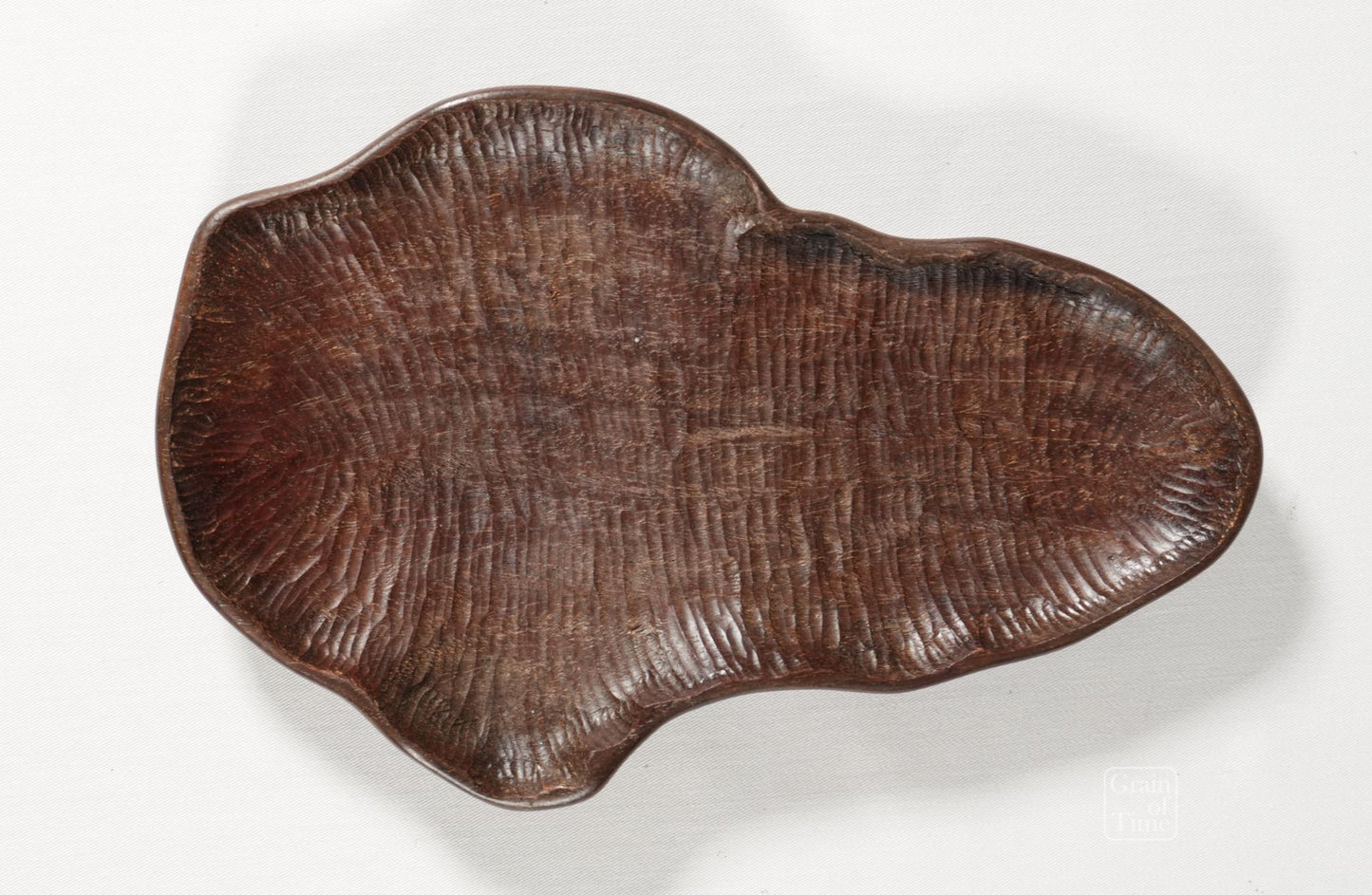
The daiza is, frankly, exceptional. the shape hugs the contours of the stone perfectly. the design is simple and unfussy, the feet have a lovely shape. I believe the wood is Chinese Quince but am willing to be corrected! The carving to the inside is remarkable and done with finesse and purpose.
SKU: 24995
Size: 203 x 147 x 58mm (8 x 5¾ x 2¼ in), 1.9kg
Condition: Uncut, Excellent.
Kamogawa – The Kamo river is part of the Yodo river system, it’s origin is Mount Sanshikigatake, it is 21kms long and flows through Kyoto before it merges with the Takano river and flows onwards.
Although it is been said that Kamogawa stones are one of the three best, in reality, a lot of what gets called Kamogawa comes from the rivers it joins and becomes, for example, Takano, Kuruma, Kibune stones. So Kamogawa is kind of a catch-all name for stones found in the river that could be from somewhere else. Because Kamogawa became famous for river stones, stones from other areas were sometimes mis-sold as Kamogawa, so caution is advised in purchasing.
The typical features of Kamogawa depend on exactly where the stone is said to come from, so I will try to be clear when I’m selling stone called ‘Kamogawa’.